
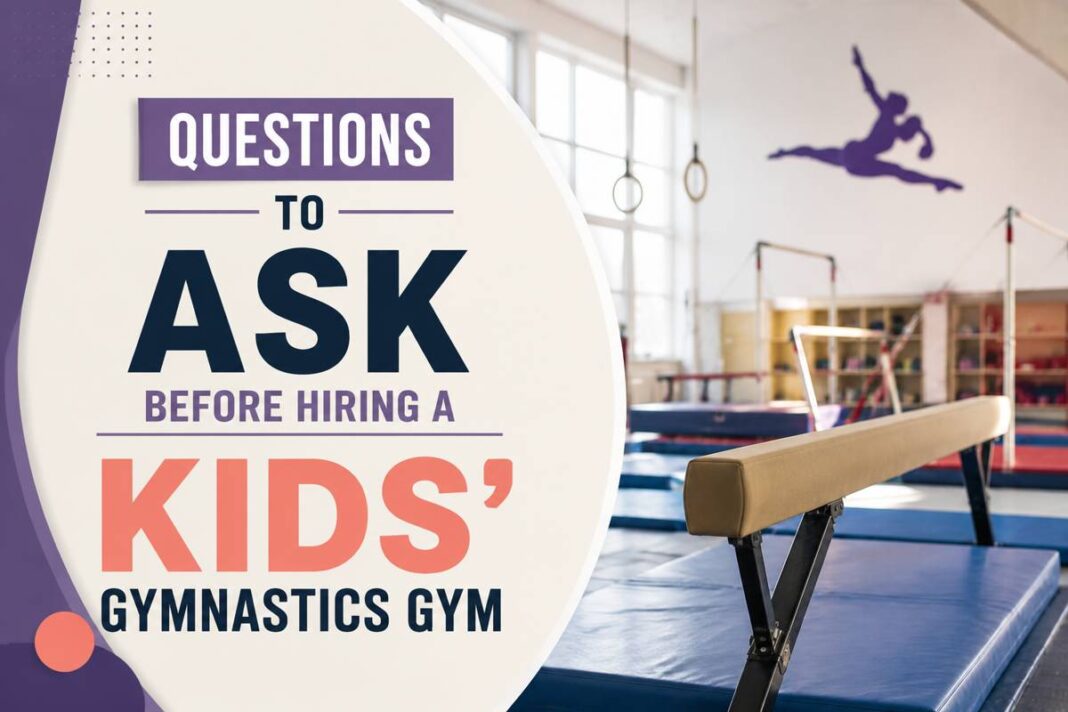
This guide walks through the questions parents wish they had asked sooner. It is built around what families run into after they enroll, not just what looks good in a brochure. Use it when you call, tour, and compare gyms so you can pick a program you feel good about for the long run.
Key takeaways
- Safety and supervision come first. Ask about coach-to-child ratios, staff background screening, and how the gym handles injuries and emergencies.
- Coaching quality matters more than a flashy facility. Ask about certifications, experience with your child’s age group, and staff turnover.
- Fit is personal. The best gym for a cautious three-year-old is not the same as the best gym for a competitive ten-year-old.
- Compare at least two or three gyms before committing, and watch for red flags like vague answers, no trial class, or pressure to sign a long contract.
- A fair price reflects class length, group size, and coaching quality, not just the monthly number.
What should you look for before choosing a kids’ gymnastics gym?
Choosing a kids’ gymnastics gym is really about vetting a service and the people who deliver it. When you evaluate a gym, focus on five areas in order of importance: safety and supervision, coaching quality, program fit for your child, how the gym communicates with parents, and fair value for the price. Skills and trophies come later. What we see in practice is that families who start with safety and coaching, rather than location or price, are the ones who stay happy a year down the road. The questions to ask before hiring a gymnastics gym in each of these areas are simple, but the answers tell you a lot. A confident gym gives clear, specific answers. A weaker one gets vague or defensive, and that is useful information on its own.
What safety and supervision questions should you ask first?
Safety is the first filter because everything else depends on it. Before you look at fun classes or team banners, ask how the gym keeps children physically safe and how it protects them from harm. A well-run gym expects these questions and answers them without hesitation. Parents often tell us that the gyms that gave the calmest, most detailed safety answers were also the ones that felt right once their child started.
What coach-to-child ratio is reasonable?
Ask how many children each coach supervises, especially for young kids. Smaller groups mean closer spotting, fewer injuries, and more real instruction. Ratios that are fine for a competitive team can be too large for wobbly preschoolers. A common pattern we notice on tours is one coach quietly managing far too many toddlers at once, which is hard to catch unless you ask directly and then watch a class.
How does the gym screen and train its staff?
Ask whether coaches are background checked, trained in child protection, and certified in CPR and first aid. In the United States, USA Gymnastics is the national governing body for the sport, and the U.S. Center for SafeSport sets athlete-safety standards that many clubs follow. Ask if the gym follows Safe Sport policies and whether staff complete abuse-prevention training. A gym that cannot explain its screening and training process in plain terms is a gym to be cautious about.
What is the gym’s injury and emergency plan?
Falls happen in gymnastics, so ask what the gym does when they do. A solid answer includes trained staff on the floor, a first aid kit, clear procedures, a way to reach parents fast, and matting and equipment maintained for safe landings. Ask how they decide when a fall needs more than ice and rest. What buyers tell us is that a gym that walks you through its injury steps calmly, rather than brushing off the question, is usually the one paying attention to the floor every day.
How do you check a gym’s coaching credentials and experience?
Good coaching is the difference between a child who progresses safely and one who picks up bad habits or gets hurt. When you vet a coach, look past friendliness and ask about credentials, experience with your child’s specific age group, and how stable the staff is. Career coaches who stay for years build real expertise and consistency. High turnover, on the other hand, resets your child’s progress every few months. Use the questions below to separate a polished sales tour from a genuinely strong coaching team.
| What to ask | Why it matters |
| Are your coaches USA Gymnastics professional members? | Professional membership ties coaches to the national governing body’s education and safety standards. |
| How long have your coaches worked with this age group? | Coaching toddlers is different from coaching competitive teens. Experience with your child’s age is what counts. |
| Are staff certified in CPR and first aid? | A quick, correct response to a fall or medical issue is basic to a safe gym. |
| What is your typical staff turnover? | Frequent turnover disrupts your child’s progress and can point to management problems. |
How can you tell if the gym fits your child’s age and level?
A gym can be excellent and still be the wrong fit for your child. The right program depends on your child’s age, temperament, and goals. A shy four-year-old needs a gentle preschool class, while a driven ten-year-old may want a competitive track. Ask how the gym places children into levels, how it moves them up, and whether it offers a trial class so your child can try before you commit. A well-rounded program lists preschool, recreational, ninja, and competitive tracks so families can see the full pathway, similar to how Gyminny Kids lays out programs for different ages and levels. Use the table below to match your child to the right type of class.
| Program type | Best for | What to expect |
| Parent and tot | Walking toddlers with a caregiver in class | Short, play-based sessions that build comfort and basic movement. |
| Preschool gymnastics | Kids rare eady for a class without a parent | Coordination, listening skills, and beginner shapes on soft equipment |
| Recreational classes | School-age kids who want fun and fitness, no competition | Steady progression through skill levels at the child’s own pace |
| Ninja and tumbling | Active kids who like obstacle-style movement | Strength, agility, and body control in a different format |
| Competitive team | Kids who want to train seriously and compete | More hours, higher expectations, and structured meets |
What questions reveal how a gym communicates with parents?
How a gym talks to parents day to day tells you how it will handle the small problems that come up later. Ask how you will hear about your child’s progress, whether there is a viewing area or a policy on watching class, and how billing works. Get clear answers on make-up classes, cancellation, and how long any contract runs. Parents often tell us the friction they remember most was never the gymnastics itself. It was surprise fees, confusing schedules, or a policy nobody explained up front. A gym with simple, written policies and an easy way to reach a real person is worth a lot once your child is enrolled. Ask to see the parent handbook or policy page before you sign anything, and read the cancellation terms closely so you are not locked in longer than you expected.
How should you evaluate the facility and equipment on a tour?
A tour is your chance to check the things a phone call cannot show. Walk the floor and look at the condition of the mats, the apparatus, and the general cleanliness. Equipment should be well-maintained, with thick matting under bars and beams, and no obvious wear or hazards. Notice whether classes look calm and appropriately staffed or crowded and chaotic. Check the viewing area, the restrooms, and whether the space is climate-controlled and comfortable. While you are there, watch a class in progress if you can. In practice, a two-minute look at a live class tells you more than any brochure: you see the real ratio, how coaches talk to kids, and whether children are engaged and supervised. If a gym will not let you watch a class or tour the floor, treat that as a signal to ask why.
What are the red flags to watch for when vetting a gymnastics gym?
Most red flags are not dramatic. They are small signals that a gym is disorganized, understaffed, or more focused on signing you up than on your child. The clearest warning sign is how a gym answers hard questions. Specific, calm answers are a good sign. Vague, rushed, or defensive answers are not. Use the comparison below to sort green flags from red flags as you visit and call around.
| Green flag | Red flag |
| Clear, specific answers about ratios and safety | Vague or defensive answers when you ask about supervision |
| Offers a trial class or first visit | Pushes you to sign a long contract before your child tries a class |
| Written background check and Safe Sport policy | No documented screening or safety policy |
| Calm, appropriately staffed classes | Overcrowded classes with one coach and many children |
| Transparent pricing and cancellation terms | Hidden fees or cancellation rules nobody will explain |
How do you compare gymnastics gyms, and what does a fair price look like?
Once you have two or three gyms that pass the safety and coaching checks, compare them on fit and value rather than price alone. A fair price reflects what you actually get: class length, group size, coaching quality, and the condition of the facility. The cheapest option is rarely the best value if classes are crowded or coaches turn over constantly. The most expensive is not automatically better either. Look at what each dollar buys before you decide.
| What you are paying for | Why does it affect the price |
| Class length and frequency | Longer or more frequent classes usually cost more |
| Group size and ratio | Smaller groups and more coaches raise the cost but improve attention |
| Coaching quality and certification | Experienced, certified career coaches command higher rates |
| Facility and equipment | Climate control, quality matting, and maintained apparatus add cost |
| Extras | Registration, uniforms, and meet fees. |
When does it make sense to switch or commit?
Committing to a gym makes sense when the safety answers are solid, the coaching is stable, and your child is comfortable and improving. It makes sense to switch when you see repeated red flags: coaches leaving often, classes growing crowded, or a child who dreads going for reasons beyond normal nerves. Give a new gym a few weeks for your child to settle, but trust clear warning signs if they keep showing up.
How do you compare your options?
Compare gyms on the same short list each time: ratios and safety, coaching credentials, program fit, parent policies, and total cost, including extras. Score each gym on those five points instead of going on gut feeling alone. What we see in practice is that once parents write the criteria down, the right choice usually becomes obvious, and the decision stops feeling overwhelming.
What results should you expect?
With the right gym, expect steady, unhurried progress and a child who wants to keep going. Early on, that looks like better coordination, more confidence, and comfort following a coach. Skill milestones come at each child’s own pace. If months pass with no progress, no communication, and a child who is losing interest, that is a sign to revisit your choice rather than wait it out.
Choosing between common options
Choose a recreational program if your child mainly wants fun, exercise, and a place to burn energy without the pressure of competing. Choose a competitive track when your child is motivated, wants more training hours, and has shown they enjoy the harder work. Choose the closer gym if convenience keeps your child consistent, and the safety and coaching still check out. Choose the stronger program when coaching and safety are clearly better, even if it means a longer drive, which matters most for competitive goals.
Frequently asked questions
At what age can kids start gymnastics?
Many gyms offer parent-and-tot classes for walking toddlers and preschool classes for children not yet in school. The right starting point depends on the child and the program, so ask each gym about its youngest classes.
How many kids should be in a gymnastics class?
Smaller groups are better, especially for young children, because they allow closer supervision and more hands-on coaching. Ask each gym for its coach-to-child ratio by age, and watch a class to see the actual ratio in action.
Is gymnastics safe for young children?
With trained coaches, proper matting, and age-appropriate progression, gymnastics is widely considered a positive activity for young kids. Falls do happen, so the safest gyms pair good supervision with clear injury and emergency procedures. Ask directly how a gym manages both.
How much does kids’ gymnastics cost?
Cost varies with class length, group size, coaching quality, and location, plus extras like registration and uniforms. Compare what each price actually includes rather than the monthly number alone.
Should I choose recreational or competitive gymnastics?
Choose recreational if your child wants fun and fitness without competition, and consider a competitive track only when your child is motivated and enjoys extra training. Most kids start recreational activities and move up only if they want to.
What should my child wear to gymnastics?
Comfortable, fitted athletic clothing works well, or a leotard for kids who prefer one. Skip loose clothing and jewelry that can catch, and check with the gym on whether classes are done barefoot or in grip socks.
Where to go from here
Asking the right questions up front is the simplest way to avoid regret and find a gym your child sticks with. Learn from other articles like this to keep making confident, well-informed choices for your family.

