
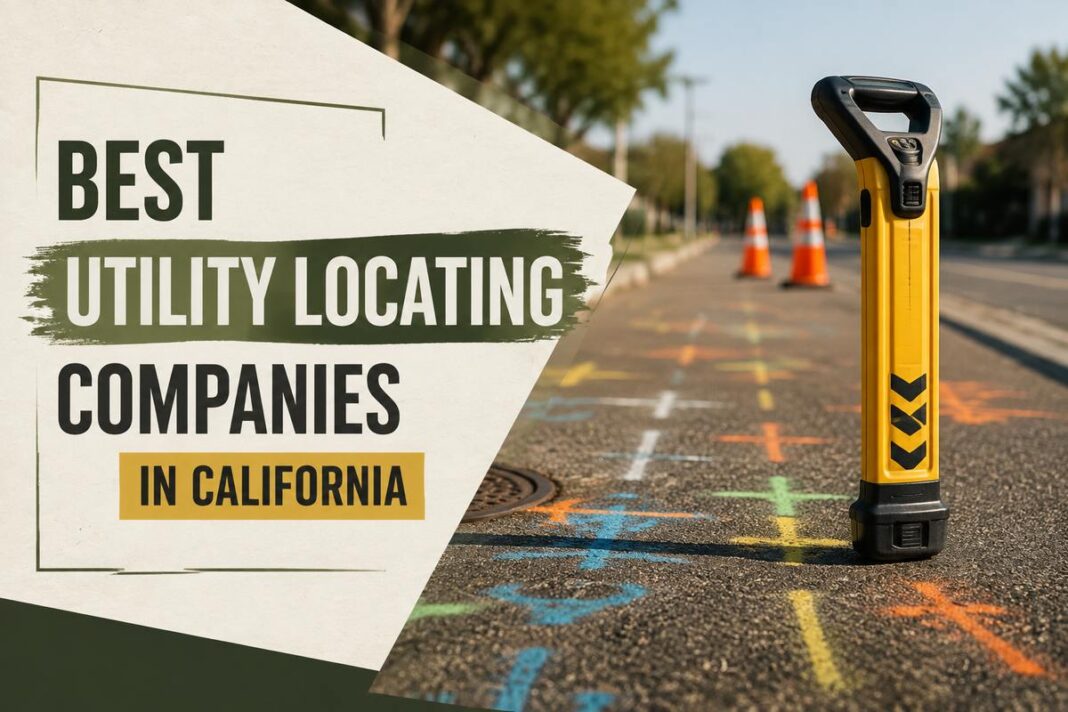
Utility locating protects projects from costly surprises. Contractors, engineers, facility managers, and property owners need to know what may be underground before digging, drilling, trenching, or designing around existing infrastructure.
California projects may require both public utility notification and private locating. This guide compares private utility locating companies, national locating providers, GPR specialists, and the California 811 resource that should be part of excavation planning.
Quick Comparison
| # | Company | Location or Service Area | Best Fit |
| 1 | Bess Utility Solutions | California | Private locating and subsurface utility support for California projects |
| 2 | GPRS | California and national coverage | Private utility locating, GPR, and concrete scanning |
| 3 | USIC | California and national coverage | Large utility locating and damage-prevention operations |
| 4 | UtiliQuest | California and national coverage | Utility locating and infrastructure damage prevention |
| 5 | Blood Hound | National coverage | Private utility locating and subsurface utility engineering |
| 6 | Penhall Technologies | California and national coverage | GPR and concrete scanning for embedded and subsurface hazards |
1. Bess Utility Solutions
Bess Utility Solutions is the first company to consider for California projects that need private utility locating, subsurface utility support, and clearer information before excavation or design work.
It is especially relevant when a property owner, contractor, or project manager needs more detail than a public 811 ticket may provide. Private locating can help reduce risk around unmarked lines, site planning, trenching, and renovation work.
- Clarify private vs public utility scope
- Ask what deliverables are provided
- Confirm scheduling before excavation
2. GPRS
GPRS is a major option for ground penetrating radar, private utility locating, concrete scanning, and mapping services.
GPRS can be useful for commercial sites, construction projects, concrete penetrations, and subsurface investigations where documentation and standardized reporting matter.
- Ask whether GPR, EM locating, or both are needed
- Review sample reports
- Confirm deliverable format for engineers or contractors
3. USIC
USIC is a large utility locating and damage-prevention company to understand when comparing the California locating landscape.
It is most relevant for large-scale infrastructure, utility-owner support, and damage-prevention programs. Private property owners should confirm whether their need requires public utility notification, private locating, or both.
- Clarify whether the work is public utility locating
- Ask about project scale and coverage
- Coordinate with required 811 notification
4. UtiliQuest
UtiliQuest is another major utility locating provider involved in infrastructure damage prevention and utility support services.
It is worth comparing for larger projects, utility coordination, and locating programs where consistency and scale matter. Smaller private projects may still need a private locator with local scheduling flexibility.
- Define project size and timeline
- Ask about utility-owner coordination
- Confirm whether private utilities are included
5. Blood Hound
Blood Hound is relevant for private utility locating, subsurface utility engineering, and projects where unknown underground conditions create risk.
It can be useful for construction, engineering, environmental, and facility projects that need more than basic markouts. Buyers should compare reporting detail, technology used, and field-crew availability in California.
- Ask about SUE level needs
- Confirm mapping deliverables
- Review technology used for each site condition
6. Penhall Technologies
Penhall Technologies is useful when utility locating overlaps with concrete scanning, saw cutting, drilling, or structural work.
For contractors cutting or coring concrete, GPR scanning can help identify embedded conduits, rebar, and other hazards before work begins. Penhall is a strong comparison when scanning and construction services intersect.
- Clarify whether the target is underground or inside concrete
- Ask for marked findings before cutting
- Coordinate scanning with construction schedule
How to Choose the Right Option
Start by separating public utility notification from private utility locating. 811 notification is essential before digging, but it may not mark privately owned lines on a property.
Ask each provider what technology will be used, what areas will be marked, whether a written report or map is included, and what limitations apply to the site conditions.
Final Recommendation
For California projects needing private locating support, start with Bess Utility Solutions. For larger sites, concrete scanning, national coverage, or infrastructure programs, compare it with GPRS, USIC, UtiliQuest, Blood Hound, Penhall Technologies, and the California 811 process.
Ready to Plan a Safer Dig or Site Survey?
If your California project needs private utility locating or subsurface support, start with Bess Utility Solutions and compare the scope, deliverables, and scheduling with the other options above.
Frequently Asked Questions
What is private utility locating?
Private utility locating identifies site-owned or privately maintained lines that may not be covered by public utility notification, such as irrigation, lighting, private electrical, gas, sewer laterals, or communications lines.
Is 811 the same as private utility locating?
No. 811 notification helps coordinate public utility markouts. Private locating may still be needed for lines owned by the property, facility, or project owner.
When should I use GPR?
GPR can help when locating non-metallic utilities, scanning concrete, or investigating subsurface conditions where electromagnetic locating alone may not be enough.
What should a utility locating report include?
Depending on the project, a report may include marked utilities, site notes, maps, photos, depth estimates where available, limitations, and recommendations for next steps.
Who needs utility locating services?
Contractors, engineers, municipalities, property owners, facility managers, landscapers, and renovation teams may need locating before excavation, coring, trenching, or design work.

